
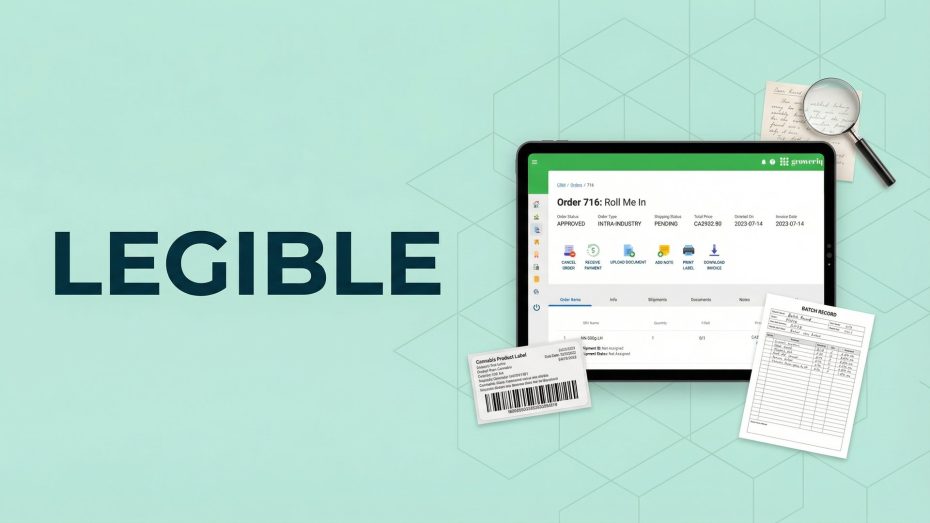

Could an inspector read your oldest batch record without asking for help?
If your facility still relies on handwritten batch records, paper logbooks, or thermal-printed labels, the honest answer may be no. The Legible principle is the second pillar of the ALCOA++ data integrity framework, and it requires that all records remain readable and unambiguous for the entire retention period. For cannabis licence holders in Canada, that means legible records cannabis GMP teams can retrieve and interpret years after the original activity, not just the day they were created.
This guide defines what legibility means in the regulatory context, explains where cannabis operations most commonly fail, walks through the specific audit findings that inspectors flag, and outlines how digital record-keeping and automated label printing address the problem at its source.
What Does Legible Mean in ALCOA++ Data Integrity?
Legible means every record is readable and free of ambiguity, not just when it is created, but for the entire duration it must be retained.
The Pharmaceutical Inspection Co-operation Scheme (PIC/S), whose member authorities include Health Canada, defines the Legible principle in PI 041-1: Good Practices for Data Management and Integrity as: “All records should be legible; the information should be readable and unambiguous. Records must remain readable throughout the retention period.” The WHO TRS 996 Annex 5 reinforces this position, requiring that data be permanently legible and that any medium used for storage preserve readability over time.
The word “unambiguous” is doing real work in that definition. A record is not legible simply because someone can see marks on paper. It must be interpretable without guesswork. If an inspector needs to ask an operator what a scrawled notation means, or if two people reading the same handwritten entry arrive at different numbers, the record fails the Legible principle regardless of whether ink is physically visible on the page.
Why Do Legible Records Matter for Cannabis GMP Compliance?
Because Health Canada expects documentation to remain accessible and interpretable for the full retention period, and records that cannot be read are functionally equivalent to records that do not exist.
The Cannabis Regulations (Part 11, Sections 231-232) require licence holders to retain every version of documentation demonstrating compliance with Good Production Practices for at least two years after the document is replaced or the licence expires. Health Canada’s GPP Guide for Cannabis provides detailed expectations for batch records, deviation reports, calibration logs, and storage records. Every one of these documents must be readable when an inspector requests it, whether that request comes six months or six years after the record was created.
In practice, the retention obligation means that legibility is not a one-time quality. A batch record that is perfectly clear on the day it is written must remain equally clear two, five, or ten years later. Paper in a production environment does not age well. Cannabis facilities involve moisture, temperature variation, handling, and storage conditions that accelerate degradation. A record that was legible in January may be unreadable by December.
Where Do Legible Records Cannabis GMP Practices Break Down?
Legibility failures fall into three categories: handwriting that was never clear to begin with, labels and prints that degrade over time, and scanned copies that lose fidelity. Each one creates a different audit risk.
Illegible Handwriting on Batch Records
Handwritten batch records are the most common legibility failure in cannabis manufacturing. Operators filling out paper forms during a production shift are working quickly, often wearing gloves, in environments that are not designed for careful penmanship. The result is records where digits are ambiguous (is that a 3 or an 8?), abbreviations are inconsistent, and notes in margins are indecipherable to anyone other than the person who wrote them. When a Health Canada inspector reviews a batch record and cannot determine whether a recorded weight was 142.3 g or 148.3 g, the entire record’s reliability is questioned.
The problem compounds when multiple operators contribute to the same batch record across shifts. Each person’s handwriting is different. Abbreviations vary. A night-shift operator may use shorthand that the day-shift quality team cannot interpret. The batch record becomes a patchwork of handwriting styles where legibility depends on who happens to be available to translate.
Faded Labels and Thermal Prints
Thermal-printed labels, commonly used on scales, label printers, and receipt printers, are inherently impermanent. The print relies on heat-sensitive paper that degrades when exposed to light, heat, moisture, or friction. In a cannabis production environment, all four are present. Labels affixed to containers in drying rooms, cure rooms, or cold storage can become partially or fully unreadable within months. A label that was perfectly legible when printed in March may be a blank white rectangle by September.
This is not a hypothetical risk. Thermal fade is a well-documented failure mode in pharmaceutical GMP audits, and the same physics apply to cannabis. If a lot label is the only physical link between a container of product and its batch record, and that label is unreadable, the product’s identity is effectively lost.
Corrupted or Low-Resolution Scanned Records
Some facilities attempt to solve the paper legibility problem by scanning handwritten records into digital files. This approach introduces its own failure mode. Low-resolution scans, skewed pages, poor contrast settings, and lossy compression (JPEG artifacts on already-difficult handwriting) produce digital files that are no more legible than the originals. In some cases, they are worse: a handwritten entry that was marginal but readable on paper becomes completely indecipherable in a low-quality scan.
Scanned PDFs also carry a subtle risk: they preserve the image of the record but not the data. A scanned batch record cannot be searched, sorted, or cross-referenced. If an inspector asks for all batch records containing a specific lot number, staff must open and visually scan every PDF rather than running a database query. This creates a secondary failure against the Available principle (records must be readily retrievable), but the root cause is that the record was never captured in a structured, legible digital format in the first place.
| Failure Mode | Root Cause | Audit Risk | Retention Impact |
|---|---|---|---|
| Illegible handwriting | Manual entry under production conditions | Inspector cannot verify recorded values | Fails immediately or within months |
| Faded thermal labels | Heat-sensitive paper degrades in facility conditions | Lot identity lost; product-to-record link broken | Degrades within months |
| Low-quality scanned PDFs | Scanning preserves images, not data; lossy compression | Digital copy no more legible than original | Permanently degraded from point of scan |
GrowerIQ Mobile Scanner
See how it supports legible digital records on the facility floor
Digital form entry and one-click ZPL label printing replace handwritten batch records.
Explore the Scanner →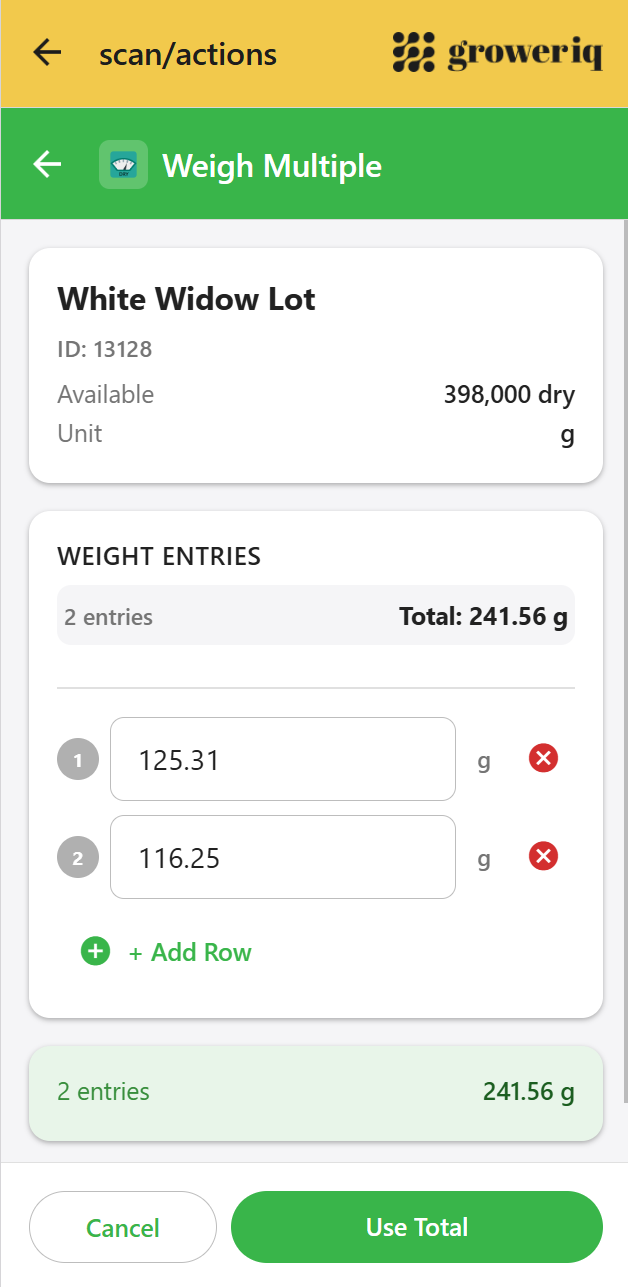
How Digital Records and Label Printing Support Legibility
The solution to legibility failures is straightforward: replace the media that degrades with media that does not. Digital text entered through structured forms remains identical on day one and day one thousand. Labels printed with direct thermal transfer or ZPL-based printing maintain readability for the full retention period because the print technology is fundamentally different from thermal receipt paper.
Digital Form Entry Replaces Handwriting
When operators enter data through structured digital forms on a mobile device or terminal, every character is machine-generated text. There is no variation between operators, no ambiguity between a 3 and an 8, and no illegible margin notes. The data is stored in a database as typed values (strings, numbers, timestamps) rather than as images of handwritten marks. It is legible the moment it is created, and it remains identically legible for as long as the database exists.
GrowerIQ’s mobile scanner uses structured form fields (text inputs, radio buttons, dropdown selectors) for all data capture on the production floor. Operators select from controlled vocabularies where possible (inspection results, activity types, unit selections) and enter free text only where necessary. The result is a batch record where every field is machine-readable, searchable, and permanently legible. Field labels are displayed in a standardised format (converting internal identifiers to readable titles), so the record is self-documenting.
ZPL Label Printing Produces Permanent, Legible Labels
ZPL (Zebra Programming Language) labels printed on Zebra industrial printers use direct thermal transfer technology that bonds ink to label stock through heat and a ribbon. Unlike thermal receipt paper, which relies on a heat-sensitive coating that fades, thermal transfer labels are chemically stable. The print does not degrade under normal storage conditions, even across years of exposure to light, moisture, and handling.
GrowerIQ’s scanner supports one-click label printing from anywhere on the production floor. An operator scanning a lot barcode can print a replacement label, a packaging label, or a transfer label directly from the device to a nearby Zebra printer over the facility network. The label content (lot number, weight, date, strain, operator) is generated from the database record, ensuring that the label matches the digital record exactly. There is no handwriting on the label, no risk of transcription error between the system and the label, and no thermal fade.
For facilities where labels serve as the physical link between product containers and batch records, the durability of the label is a legibility concern. A faded or illegible label is not just an inconvenience; it is a broken chain of custody. ZPL thermal transfer labels maintain that chain for the full retention period.
Formatted Display for Record Review
Legibility applies not only to the records at the time of creation but also when those records are reviewed during audits, investigations, or quality checks. Digital records stored in a database can be displayed in clean, formatted layouts that present information consistently regardless of who recorded it or when. Field names are standardised, units are displayed alongside values, and timestamps follow a consistent format across every record.
This is a subtle but important distinction from scanned paper records, where the layout depends on which form was used, how the operator filled it out, and how well the scanner captured the page. Digital records are rendered fresh from structured data each time they are viewed, ensuring legibility is never lost to physical degradation.
The overlap between legibility and record durability is significant. Records that are permanently legible must also be permanently stored. For a deeper exploration of how digital storage and immutable audit trails protect records over time, see our guide on enduring records and audit trails in cannabis.
Validation Disclaimer: ALCOA++ data integrity is achieved through validated processes at your facility. GrowerIQ provides the software foundation that supports the Legible principle; your quality team completes the validation documentation (IQ/OQ/PQ) as part of your facility’s quality management system. For guidance on the validation process, see our post on GMP software validation for cannabis.
Key Takeaways
- Legible means readable and unambiguous for the full retention period: PIC/S PI 041-1 requires records to remain interpretable throughout the time they must be kept, not just when they are created.
- Handwriting is the most common legibility failure: Production conditions, gloves, time pressure, and variation between operators make handwritten batch records unreliable within months.
- Thermal labels fade: Scale receipts and thermal-printed labels degrade in cannabis production environments, breaking the physical link between product and batch record.
- Scanning paper does not create legible digital records: Low-resolution scans preserve images, not data. They cannot be searched and may be less legible than the originals.
- Digital form entry and ZPL label printing solve legibility at the source: Machine-generated text does not degrade, and thermal transfer labels remain readable for years.
Frequently Asked Questions
What does legible mean in cannabis GMP record-keeping?
Legible means every record must be readable and free of ambiguity for the entire retention period. Under Health Canada’s Cannabis Regulations, documentation must be retained for at least two years after replacement or licence expiry. If a batch record, label, or logbook entry cannot be read without interpretation or guesswork at any point during that period, it fails the Legible principle defined in PIC/S PI 041-1.
Why do handwritten batch records fail the legibility requirement?
Handwritten records fail for three reasons: operator handwriting varies in clarity, production conditions (moisture, gloves, time pressure) reduce penmanship quality, and paper degrades in facility environments. The combination means that a handwritten batch record may be marginal on the day it is created and unreadable within months. An inspector who cannot determine whether a recorded weight was 142.3 g or 148.3 g will question the reliability of the entire record.
How long must cannabis records remain legible in Canada?
The Cannabis Regulations (Part 11, Sections 231-232) require licence holders to retain every version of documentation for at least two years after the document is replaced or the licence expires. In practice, many facilities retain records for longer periods to support ongoing compliance, audit readiness, and potential recall investigations. The record must remain legible for the full duration it is retained, regardless of the medium.
Can scanning paper records solve the legibility problem?
Not reliably. Scanning preserves an image of the original record, but if the original was already difficult to read, the scan will be equally difficult or worse. Low-resolution scans, poor contrast, and lossy compression (JPEG artifacts) further degrade legibility. Scanned records also cannot be searched or cross-referenced by field values, creating secondary compliance challenges for record retrieval.
Last updated: March 2026
Replace Handwriting with Records That Stay Legible
See how digital form entry and one-click ZPL label printing support legible records cannabis GMP teams can trust during every inspection.
EXPLORE SCANNER
About GrowerIQ
GrowerIQ is changing the way producers use software - transforming a regulatory requirement into a robust platform to learn, analyze, and improve performance.
To find out more about GrowerIQ and how we can help, fill out the form to the right, start a chat, or contact us.